Little Tree Font Review: A Playful Script for Branding
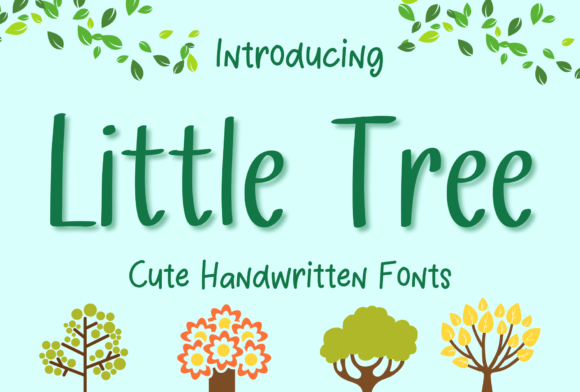
I was staring at a blank brand board for a local artisan bakery last Tuesday, trying to find the right voice for their new line of holiday gift boxes. The client wanted something that felt personal, like a note left on a kitchen counter, but polished enough for retail shelves. That's when I pulled Little Tree out of my folder. As a designer who tests dozens of Script Handwritten Fonts every month, I know the difference between a typeface that looks cute in a preview and one that actually holds up in a real logo or packaging mockup. Little Tree immediately stood out because it balances that playful, bouncy energy with enough structural integrity to remain legible on small product labels.
Using Little Tree for Holiday Cards and Seasonal Packaging
When you are working on seasonal projects, the pressure is on to make designs feel warm and inviting without slipping into cliché. Little Tree shines brightest here, specifically for Christmas cards, birthday cards, and Anniversary cards. In my recent test, I applied this Script Handwritten Fonts candidate to a series of Mother s Day cards and gift tags. The stroke variation feels organic, mimicking the natural pressure of a marker or brush pen, which adds an immediate layer of authenticity to the design. Unlike some digital scripts that look too perfect or repetitive, this font has a charming irregularity that makes every word feel hand-lettered. For branding projects centered around holidays or celebrations, it creates an instant emotional connection with the audience, suggesting care and craftsmanship.
Applying Little Tree to Stickers, Mugs, and Merchandise
Beyond paper goods, I needed to see how this typeface performed on physical merchandise, which is often where handwritten styles struggle with clarity. I mocked up a set of vinyl stickers and a ceramic mug design to test its versatility. The results were surprisingly robust. Because Little Tree maintains open counters and distinct letterforms, it remains readable even when scaled down for a small sticker or curved around the surface of a mug. I also tested it on pillows and t-shirts, imagining a lifestyle brand selling cozy home goods. The playful nature of the font complements soft textures well, making it an excellent choice for apparel that aims to feel approachable and fun. When selecting Fonts for print-on-demand products, you need a Script Handwritten style that doesn't lose its character when printed on fabric, and Little Tree handles that transition smoothly.
Pairing Little Tree with Modern Typography for Brand Identity
No font exists in a vacuum, and a major part of my review process involves finding the right partners for a new typeface. While Little Tree is fantastic as a display font for headlines and logos, it needs support for body text and UI elements. In my branding draft, I paired it with a clean, geometric sans serif to create a balanced visual hierarchy. This combination works exceptionally well for web design and social media graphics, where you need the personality of the script to grab attention while maintaining readability for longer captions or website copy. If you are building a full brand identity, consider using Little Tree for your primary logo mark and accent elements, while relying on a neutral modern typography system for your informational content. This contrast ensures your brand feels both human and professional.
Readability and Limitations in Commercial Design Assets
It is important to be honest about where a font might not be the best fit. While Little Tree is undeniably charming, its playful, handwritten nature means it isn't suitable for long-form body text or formal corporate documents. I would avoid using this Script Handwritten Fonts option for legal disclaimers, dense editorial articles, or any context requiring high-speed reading at very small sizes. It is best utilized as a headline font, a logo font, or a decorative accent for short phrases. When testing it for a boutique identity project, I found that it excels in packaging design for product names but should be supported by a more structured typeface for ingredient lists or instructions. Understanding these limitations is key to using Little Tree effectively in commercial design assets without compromising professionalism.
Finalizing Your Project with Little Tree Font Files
Before sending any files to a client or uploading designs to a print provider, always double-check the specific file formats and licensing terms included with your download. Whether you are creating stickers for an online shop, designing t-shirts for a clothing line, or crafting Anniversary cards for a stationery brand, ensuring you have the correct commercial license is non-negotiable. Most premium Fonts come with desktop and webfont versions, allowing you to use Little Tree across various platforms from Adobe Illustrator to your website's CSS. Take the time to explore any included alternates or ligatures that might add extra flair to your logo design or packaging layouts. By thoroughly testing the font in realistic scenarios—like viewing it on a pillow mockup or a Christmas card proof—you can ensure that Little Tree delivers the playful, heartfelt impact your project deserves.